Start a gratitude journal listing 5 things you’re thankful for daily or weekly.
"Let us be grateful to people who make us happy; they are the charming gardeners who make our souls blossom."
- Marcel Proust
“Acknowledging the good that you already have in your life is the foundation for all abundance.”
-Eckhart Tolle
“When you are grateful, fear disappears and abundance appears.”
-Anthony Robbins
“Gratitude is when memory is stored in the heart and not in the mind.”
-Lionel Hampton
Hello! Started by a volunteer in the Big Brothers Big Sisters Program, this blog lists positive activities that are primarily low-cost or free and geared towards youth ages 6-18. Most activities are for individual youth (or a few friends) or can be implemented by adults guiding individual young people or small groups. The activities range from online educational activites, arts and crafts, to creative game ideas.
Showing posts with label brainstorm. Show all posts
Thursday, June 21, 2012
Monday, June 4, 2012
Creature Feature
With markers, paper and a vivid imagination, kids can invent and
draw unusual, never-seen-before creatures.
Tuesday, May 1, 2012
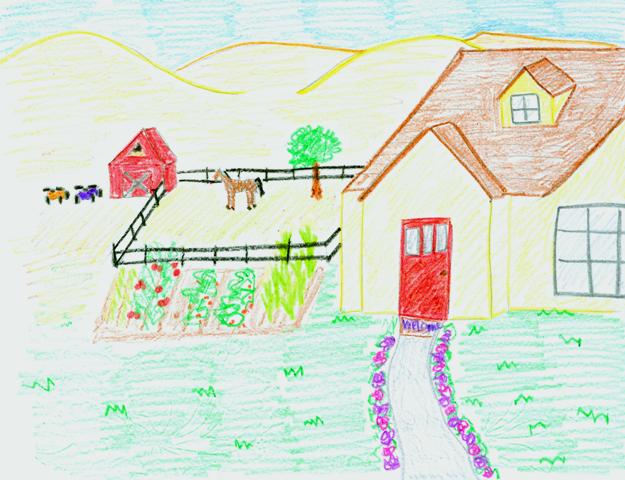
Designing a Dream House: Drawing & Thinking about a "Safe Place"
Issues: Powerlessness, insecurity.
Purpose: To help children design their dream house.
Materials: Crayons or markers, large construction paper, rulers,
pencils, and a sample house plan.
Procedure: Discuss the importance of dreams and the ability
to think about our dreams whenever we want to. Give each child paper, markers,
and other materials necessary to design their dream house. Encourage the
children to draw plans of a dream house that they can visit whenever they need
to. Younger children can describe the floor plan to you. You can draw the floor
plan. They can fill in the details.
Suggestions: Talk about safe places and how everyone needs
such a place. Ask them how a safe place would feel to them. Then have them look
at their dream house. Is there a safe place for them there? How could they
change their plan to include such a place?
Source: Making it Better: Activities for Children living in
a Stressful World, Barbara Oehlberg, Redleaf Press, 1996
Dream Family: Storytelling and Drawing
Issues: Lack of Empowerment or sense of control.
Purpose: To help children affirm their right to make choices
and have dreams.
Materials: Crayons or paint and paper.
Procedure: Explain
what a foster or adoptive family is. Then tell a story of a child, Henry, from
a land far away who traveled to a new city because his parents had died in an
accident. Henry had been told he would live with the Cassidy family on Oak
Street. But when he got to the house on Oak Street, no one named Cassidy lived
there. So, the grown-ups in the city offered Henry the chance to choose the
family of his dreams. Although Henry never forgot his first family, he found
ways to be happy with his new family.
After the story, ask the children to consider what they
would have selected if they had been Henry. Have them draw a picture of that
dream family. Assure the children the meaning of their picture will remain
personal and private to them.
Source: Making it Better: Activities for Children living in
a Stressful World, Barbara Oehlberg, Redleaf Press, 1996
Color Out All of the Anger and Sadness
Purpose: To teach children they have the ability to change their feelings and to comfort themselves.
Materials: Crayons and unlined paper.
Procedure: Suggest that children, when they need to, take a red-orange crayon and color out all the anger within them. Ask if they can feel the anger moving through their arms and hands as it leaves their body and becomes color on the page.
Suggest that children, when they need to, take a blue crayon and do the same to color out all the sadness or loneliness within them.
Ask the children what they can do, if they want to, to change their feelings. Ask what color they would color themselves when they choose to get angry when another person is angry. Then ask them what color they would color themselves not to get angry when another person is angry.
Source: Making it Better: Activities for Children living in a Stressful World, Barbara Oehlberg, Redleaf Press, 1996
Magical Glasses: Activities Using Healing Play
Issues: Distrust of environments and adults.
Purpose: To provide opportunities to build security and trust.
Materials: Children’s plastic sunglasses and several pieces of different colored cellophane.
Procedure: Give a child different colored cellophane and encourage them to look through different colors. Discuss how items in the room, such as classmates, look through different colors but stay the same without the colored cellophane. Introduce and explain the statement “looking at the world through rose-colored glasses” means everything looks bright and hopeful. Consider these questions for discussion: How might someone use their imagination to change the way a place looked and how they felt about it? Looking through what colors might make a place look safe? Comforting? Peaceful? Relaxing?
Encourage the child to wear their sunglasses if they need or want to change their view of the room so it is more comfortable for them.
Source: Making it Better: Activities for Children living in a Stressful World, Barbara Oehlberg, Redleaf Press, 1996
Tuesday, March 27, 2012
Vision Board
Friday, January 13, 2012
Subscribe to:
Posts (Atom)