Showing posts with label trust. Show all posts

Thursday, June 21, 2012

Gratitude Journal

Start a gratitude journal listing 5 things you’re thankful for daily or weekly.


 "Let us be grateful to people who make us happy; they are the charming gardeners who make our souls blossom."
- Marcel Proust
“Acknowledging the good that you already have in your life is the foundation for all abundance.”
 -Eckhart Tolle
“When you are grateful, fear disappears and abundance appears.”
-Anthony Robbins
“Gratitude is when memory is stored in the heart and not in the mind.”
-Lionel Hampton

Tuesday, May 1, 2012

Dream Family: Storytelling and Drawing

Issues: Lack of Empowerment or sense of control.
Purpose: To help children affirm their right to make choices and have dreams.
Materials: Crayons or paint and paper.
Procedure:  Explain what a foster or adoptive family is. Then tell a story of a child, Henry, from a land far away who traveled to a new city because his parents had died in an accident. Henry had been told he would live with the Cassidy family on Oak Street. But when he got to the house on Oak Street, no one named Cassidy lived there. So, the grown-ups in the city offered Henry the chance to choose the family of his dreams. Although Henry never forgot his first family, he found ways to be happy with his new family.
After the story, ask the children to consider what they would have selected if they had been Henry. Have them draw a picture of that dream family. Assure the children the meaning of their picture will remain personal and private to them.
Source: Making it Better: Activities for Children living in a Stressful World, Barbara Oehlberg, Redleaf Press, 1996

Caring Coupons

Color Out All of the Anger and Sadness

Purpose: To teach children they have the ability to change their feelings and to comfort themselves.
Materials: Crayons and unlined paper.
Procedure: Suggest that children, when they need to, take a red-orange crayon and color out all the anger within them. Ask if they can feel the anger moving through their arms and hands as it leaves their body and becomes color on the page.
Suggest that children, when they need to, take a blue crayon and do the same to color out all the sadness or loneliness within them.
Ask the children what they can do, if they want to, to change their feelings. Ask what color they would color themselves when they choose to get angry when another person is angry. Then ask them what color they would color themselves not to get angry when another person is angry.
Source: Making it Better: Activities for Children living in a Stressful  World, Barbara Oehlberg, Redleaf Press, 1996

Magical Glasses: Activities Using Healing Play

Issues: Distrust of environments and adults.
Purpose: To provide opportunities to build security and trust.
Materials: Children’s plastic sunglasses and several pieces of different colored cellophane.
Procedure: Give a child different colored cellophane and encourage them to look through different colors. Discuss how items in the room, such as classmates, look through different colors but stay the same without the colored cellophane. Introduce and explain the statement “looking at the world through rose-colored glasses” means everything looks bright and hopeful. Consider these questions for discussion: How might someone use their imagination to change the way a place looked and how they felt about it? Looking through what colors might make a place look safe? Comforting? Peaceful? Relaxing?
Encourage the child to wear their sunglasses if they need or want to change their view of the room so it is more comfortable for them.
Source: Making it Better: Activities for Children living in a Stressful  World, Barbara Oehlberg, Redleaf Press, 1996
Tuesday, January 24, 2012

Learning How to be Honest


Art
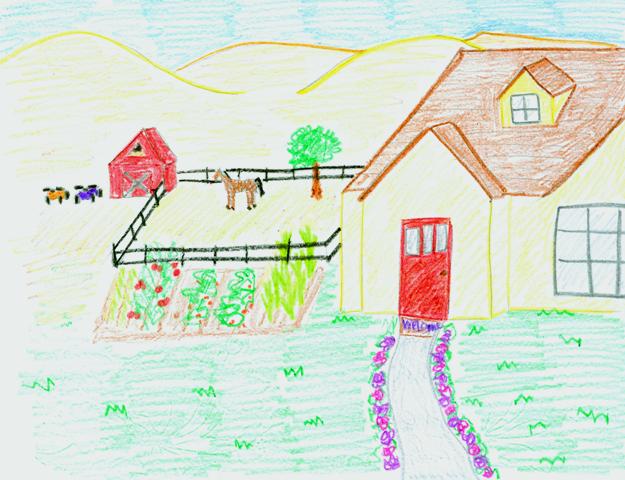
To instill the value of honesty in a child, use art. Have her draw a picture of how it makes her feel when someone is honest and trustworthy. Give her an example, like when she dropped a dollar and a friend gave it back to her. Have her draw another picture of how she would feel if the person had not been honest with her. Your child will learn empathy in this way and recognize the positive aspects of honesty and the negative associations with being dishonest.